
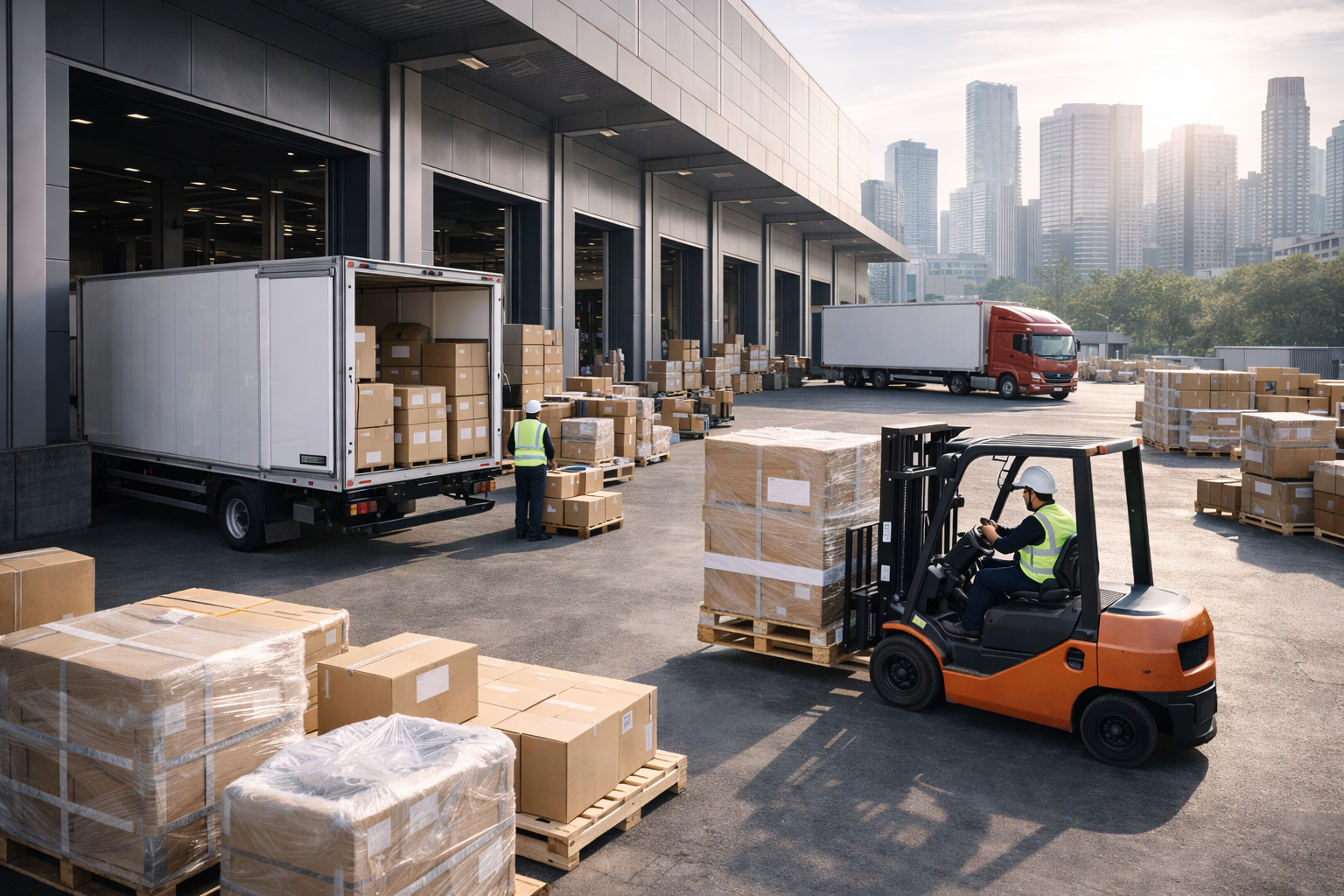
Full Load
Full load service is preferred for time-critical or high-volume shipments with dedicated vehicle capacity.
What Is This Service?
Full Load is a dedicated-vehicle model that provides stronger control over shipment execution.
- Dedicated vehicle capacity
- Higher operation control
Who Is It Suitable For?
It fits manufacturing, project and time-critical shipments requiring full vehicle capacity.
- Full-capacity cargo needs
- Time-critical shipments
How Does the Operation Process Work?
Vehicle allocation, loading slot and delivery target are managed under one operation plan.
- Vehicle allocation
- Loading slot
- Delivery target
Pricing Factors
Pricing is determined by vehicle type, route distance, cargo profile and delivery window.
- Vehicle type
- Route
- Delivery window
Partial vs Full-Load Comparison
Compared to partial model, cost structure differs while speed and operational control increase.
- Different cost structure from partial
- Higher speed and control
Fast Operation and Delivery Options
In urgent scenarios, full-load model enables direct dispatch without consolidation waiting.
- Direct dispatch
- No consolidation waiting
What Information Is Required for a Quote?
Quote stage should define vehicle expectation, loading duration, unloading constraints and target delivery.
- Vehicle expectation
- Load-unload constraints
- Delivery target
Why Renk Logistics?
Renk Logistics reduces delay risk in full-load operations through dedicated capacity and planned dispatch discipline.
- Dedicated capacity governance
- Delay risk reduction
Full Load operations can be planned with your route details.
Share pickup-delivery points, load profile and target date to receive a suitable operation model.
Full Load Process Flow
Dedicated vehicle allocation
The right vehicle class is reserved exclusively for one shipment.
Direct loading plan
Direct loading and departure is organized without consolidation waiting.
Target-hour delivery
Delivery window is validated and operation is closed with handover confirmation.
Full Load FAQ
Answers below are based on this page’s visible service scope.
How is vehicle allocation done in full-load mode?
Vehicle class is dedicated to one shipment based on cargo and delivery target.
When should full-load be preferred?
It is preferred for time-critical, high-volume or single-shipment priorities.
What affects pricing most?
Vehicle class, route and delivery window are key drivers.
What is the benefit of direct dispatch?
Without consolidation wait, operation timing becomes more controllable.
Related pages
Use these pages to compare options and move to action.
Request Quote for Full Load
Complete the form and let our team prepare your shipment plan.
Get Quote